

The best time to post on Instagram is not on anyone's chart


The Junibloom team
Building the growth OS for growing creators
Search this question and you'll find the same recycled answer: a colorful grid claiming Tuesday 11 AM is magic, sourced from millions of accounts that aren't yours. Here's the uncomfortable truth about those charts, and the 20-minute method that replaces them with your own answer.
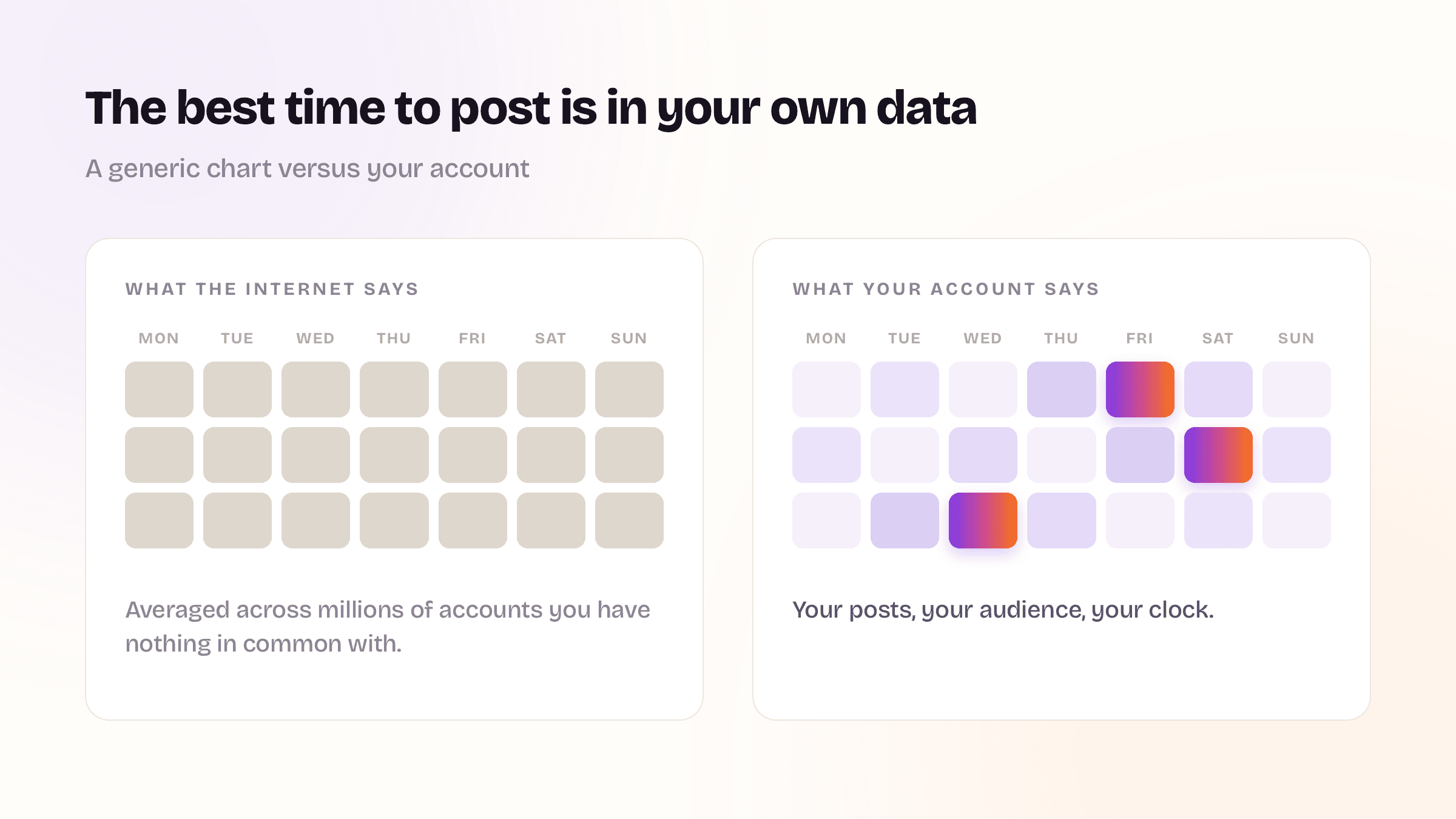
The short version: there is no universal best time, because the only clock that matters is your audience's. Global charts average bakers in Berlin with gamers in Jakarta, so they converge on bland midday slots that are mediocre for everyone. Your Instagram insights already show the times your followers are most active. Post into the start of those windows, then measure. Two weeks of your own results tell you more than a chart built from other people's accounts.
Why the generic charts keep letting you down
Two reasons, both structural.
First, averages erase niches. Picture a fitness audience that scrolls before the gym at 6 AM and a gaming audience that comes alive at midnight. Average them and you get a slot that belongs to neither. The bigger the dataset behind a chart, the more it flattens toward a middle that fits nobody.
Second, recency counts, and Instagram says so. In September 2026 Adam Mosseri listed "recency" among the things its ranking tries to value, and Meta told investors that July: "On Instagram Feed, over half of all recommended content is now less than one day old, more than double from a year ago." Neither statement tells you when to post, and neither names a "first hour" or any other window, so treat an exact one as somebody's habit until Instagram says it. What they do tell you is that most of what Instagram recommends in Feed is fresh, which makes your own timing worth testing instead of assuming.
Find your real windows in 5 minutes
- Open your insights and go to Total followers. Instagram lists "Times they're most active on Instagram" there once you have at least 100 followers. Note the top 2 or 3 hourly peaks and the strongest days for your account.
- Check where your audience lives. If your followers skew to a different timezone than yours, shift your mental clock to theirs. A creator in Mumbai with a 40% US audience is often posting for 9 PM IST, not 9 AM.
- Write down your two best windows. That's it. Those are your candidates, and they are already better than any global chart because they came from your followers.
Then run the two-week test
Candidates are not conclusions. Prove them:
- Pick your strongest format and post consistently into window A for one week, window B the next.
- Keep everything else stable: same format, similar quality, same cadence. One variable.
- Compare average reach per post, window against window. The winner is your slot until your audience shifts.
- Re-check monthly. Audiences drift with seasons, school schedules, and time changes. A window that won in March can lose in July.
One honest caveat: timing is a multiplier, not a miracle. A great post at a bad time underperforms; a bad post at a perfect time still flops. Timing decides whether a post starts in front of a full room or an empty one. The content still has to deliver. And if your reach fell and timing does not explain it, split the number before you blame the algorithm.
One exception worth knowing: this method is built on your followers' hours, and a trial reel is shown to people who don't follow you, so your followers' active times tell you much less about when to post one.
The part nobody wants to do by hand
The method above works, and it is tedious to sustain, because it means logging post times and reach in a spreadsheet for weeks, then remembering to re-check monthly.
That's the boring work Junibloom automates. It reads your posting history through Instagram's official API and shows your proven windows from your own results, not a global average. The Content Planner keeps your ideas on the days you post, and when your rhythm shifts, your plan moves with you. The best-time panel is one of the first things you see after connecting.
The one-line takeaway
Ignore the universal charts: your audience's active hours are already in your insights, so post into those windows, compare reach window against window, and re-test monthly.